

Descripción
PublishPress Taxonomies allows you to create and manage Tags, Categories, and all your WordPress taxonomy terms. PublishPress Taxonomies can help with all your WordPress content, from adding Tags and Categories to Pages, to managing WooCommerce Product Categories and bbPress Topic Tags.
PublishPress Taxonomies has integrations with AI tools including OpenAI. You can use these AI services to find the best taxonomy terms for your content.
With PublishPress Taxonomies, you can organize, optimize, and showcase all your WordPress content:
- Organize: In PublishPress Taxonomies, you can manage taxonomies, and also terms. There are tools for you to add, rename, remove, delete and even merge terms. You can add any term or taxonomy to any post type.
- Optimize: PublishPress Taxonomies can improve your SEO with automatic term management. PublishPress Taxonomies can automatically suggest relevant terms for your content and link those terms to the correct archive pages.
- Showcase: PublishPress Taxonomies allows you to use your terms for advanced features such as Related Posts and Tag Clouds.
PublishPress Taxonomies Pro
Upgrade to PublishPress Taxonomies Pro
This plugin is the free version of PublishPress Taxonomies. The Pro version of PublishPress Taxonomies has extra features and expert support. Get the PublishPress Taxonomies Pro plugin now!
10 Key Features in PublishPress Taxonomies
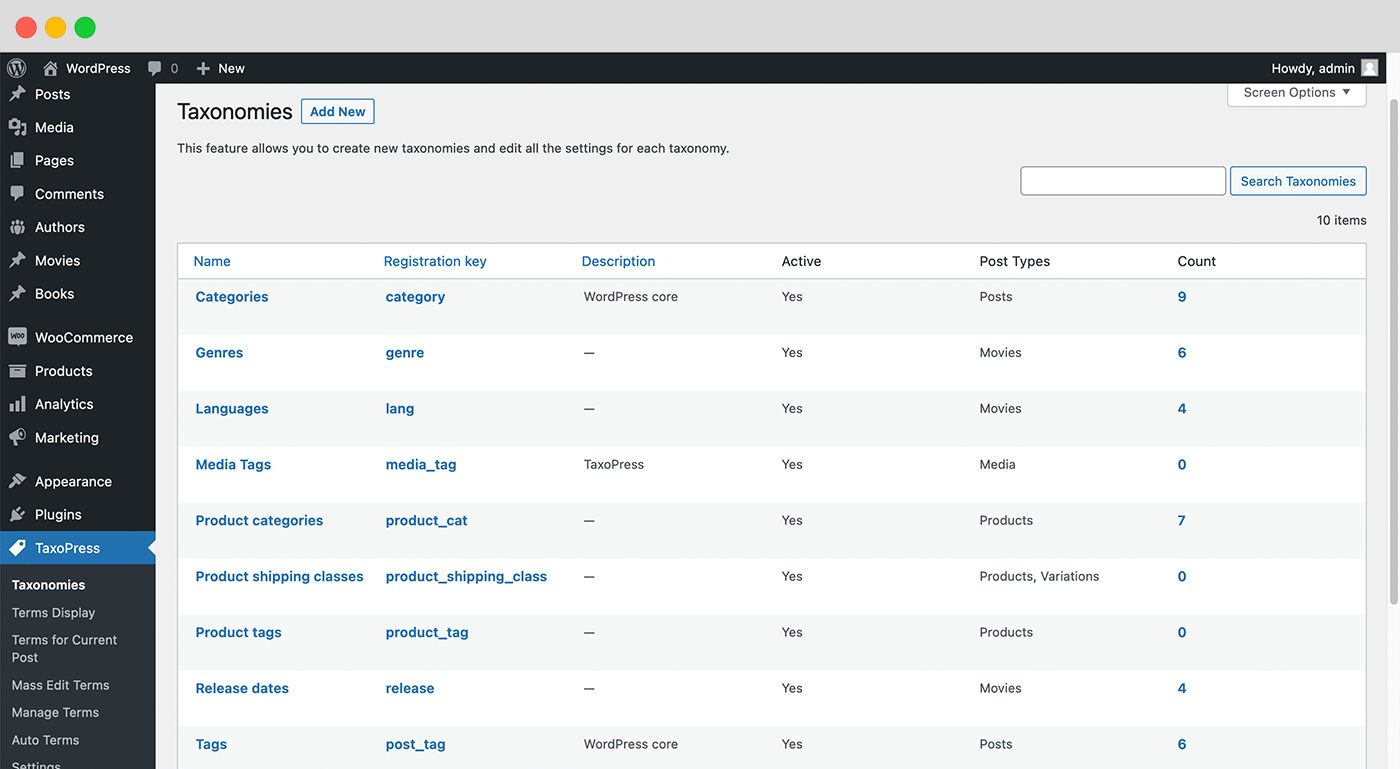
- Gestionar términos y taxonomías: Puedes crear nuevas y editar todos los ajustes para cada taxonomía.
- Visualización de términos: Esta característica te permite crear una visualización personalizable de todos los términos de una taxonomía.
- Términos para la entrada actual: Esto te permite crear una visualización personalizable de todos los términos asignados a la entrada actual.
- Entradas relacionadas: Muestra listas de entradas con etiquetas y categorías similares.
- Enlaces automáticos: Si tienes un término llamado «WordPress», la característica de enlaces automáticos encontrará cualquier instancia de «WordPress» en tu contenido y añadidoá enlaces a la página de archivo para esa etiqueta.
- Términos Automáticos: si tienes un término llamado «WordPress», Términos Automáticos puede analizar tus entradas y, cuando encuentre la palabra «WordPress», podrá añadir ese término a tu entrada.
- Add Terms with AI: The Pro version of PublishPress Taxonomies has AI integrations with OpenAI, IBM Watson, and more. This makes it easier for you to find or create the best taxonomy terms for your content.
- Sinónimos de términos: esta característica te permite tener varias palabras asociadas a un mismo término.
- Términos enlazados: Puedes conectar términos. Cuando se añada el término principal a una entrada, se añadirán también los términos enlazados.
- Gestionar términos: Añadido, renombrar, fusionar, borrar, quitar y también eliminar términos no utilizados.
Característica 1. Crear y gestionar taxonomías
PublishPress Taxonomies can manage all the taxonomies created by WordPress and your plugins and themes. You can change the settings for each taxonomy. For example, you can change the visual labels, and control whether the taxonomy is organized in parent-child relationships. You can also assign your taxonomies to different post types. For example, you can use PublishPress Taxonomies to add Categories to Pages, or WooCommerce Tags to Posts.
Click here to read about managing taxonomies.
Característica 2. Visualización de términos
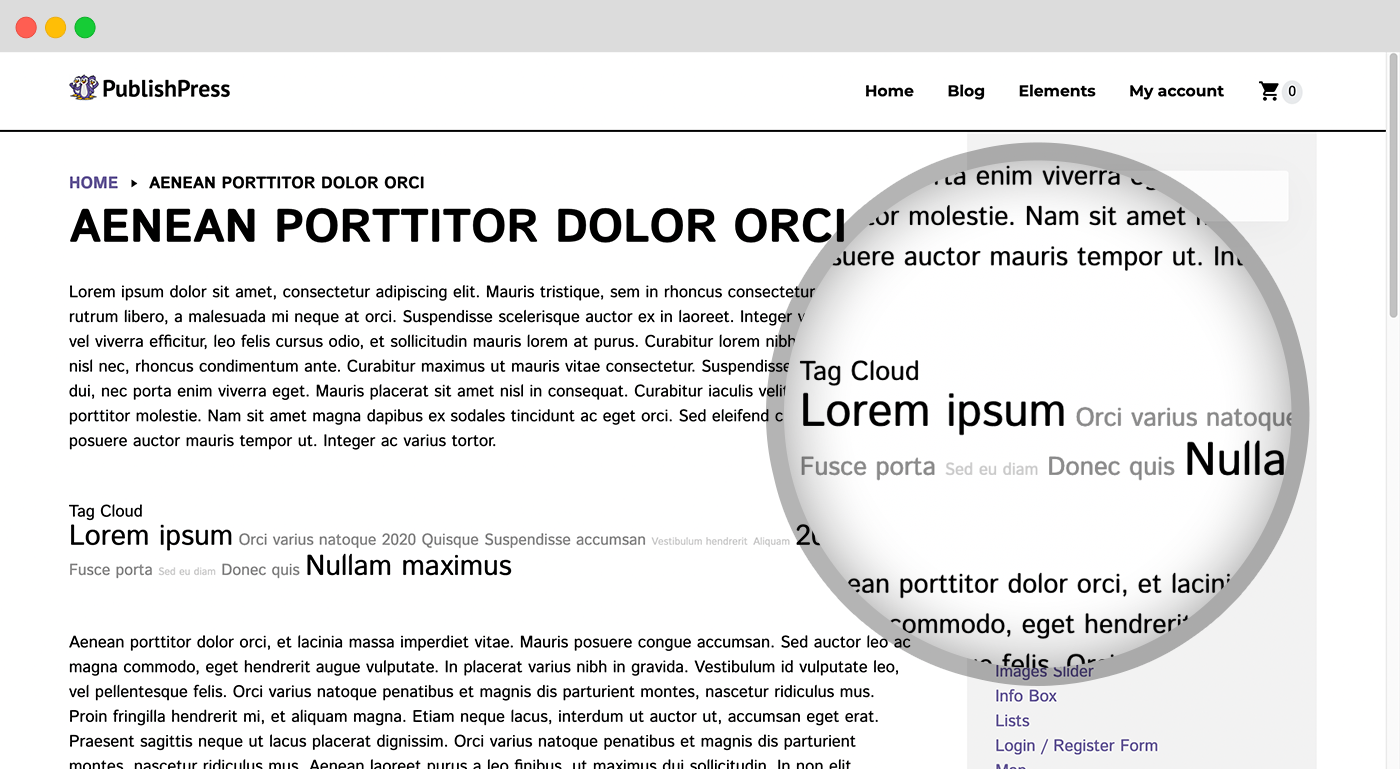
The Terms Display feature in PublishPress Taxonomies allows you to show a cloud or list of the terms used on your site. For example, you can create a «Tag Cloud» showing all your WooCommerce product categories, or you can create a list of all the tags on bbPress topics.
PublishPress Taxonomies makes it easy to customize the format of your terms, and add custom CSS styles. The terms can be shown in a shortcode, a widget, or PublishPress Taxonomies can try and automatically add the terms into your content.
Click here to read about Terms Display.
Característica 3. Términos para la entrada actual
The Terms for Current Post feature in PublishPress Taxonomies allows you to customize the displays of terms for single posts. This display is separate from any default display of terms in your theme, so you can use this feature to easily show terms anywhere on your site.
PublishPress Taxonomies makes it easy to customize the format of your terms, and add custom CSS styles. The terms can be shown in a shortcode, a widget, or PublishPress Taxonomies can try and automatically add the terms into your content.
Click here to read about Terms for Current Post.
Característica 4. Entradas relacionadas
PublishPress Taxonomies can display posts that are related to the current post. This feature works by checking for shared taxonomy terms. If your post has the terms “Vegetables” and “Food”, then this feature will likely display other posts that also have the terms “Vegetables” and “Food”. The more terms that are shared, the more likely a post is to show.
The Related Posts can be shown in a shortcode, a widget, or PublishPress Taxonomies can try and automatically add the related posts into your content.
Click here to read about Related Posts.
Característica 5. Enlaces automáticos
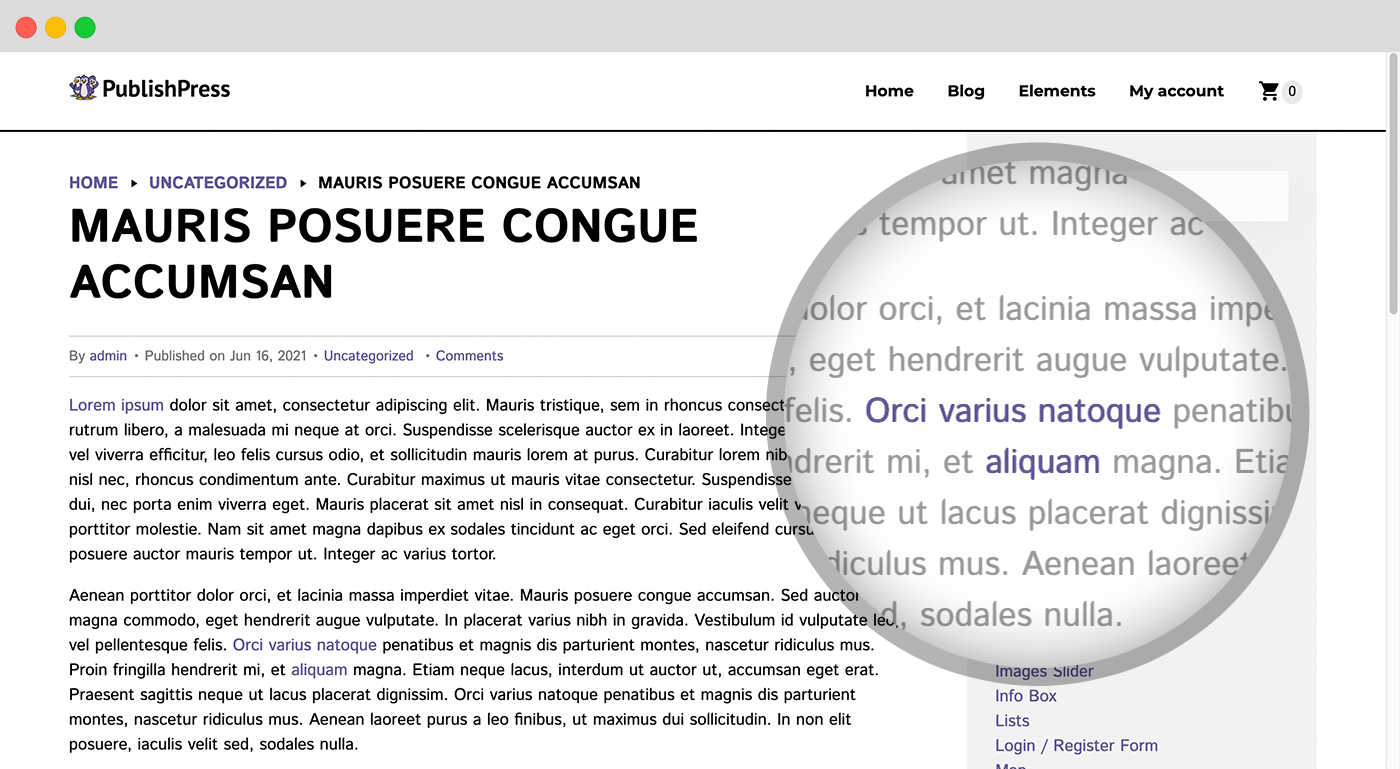
The Auto Links feature in PublishPress Taxonomies will automatically add links to your content. If you have a term called “WordPress”, the Auto Links feature will find any instances of “WordPress” in your content and add a link to the archive page for that tag. So any instances of “WordPress” will link to /tag/wordpress.
Click here to read about Auto Links.
Característica 6. Términos automáticos
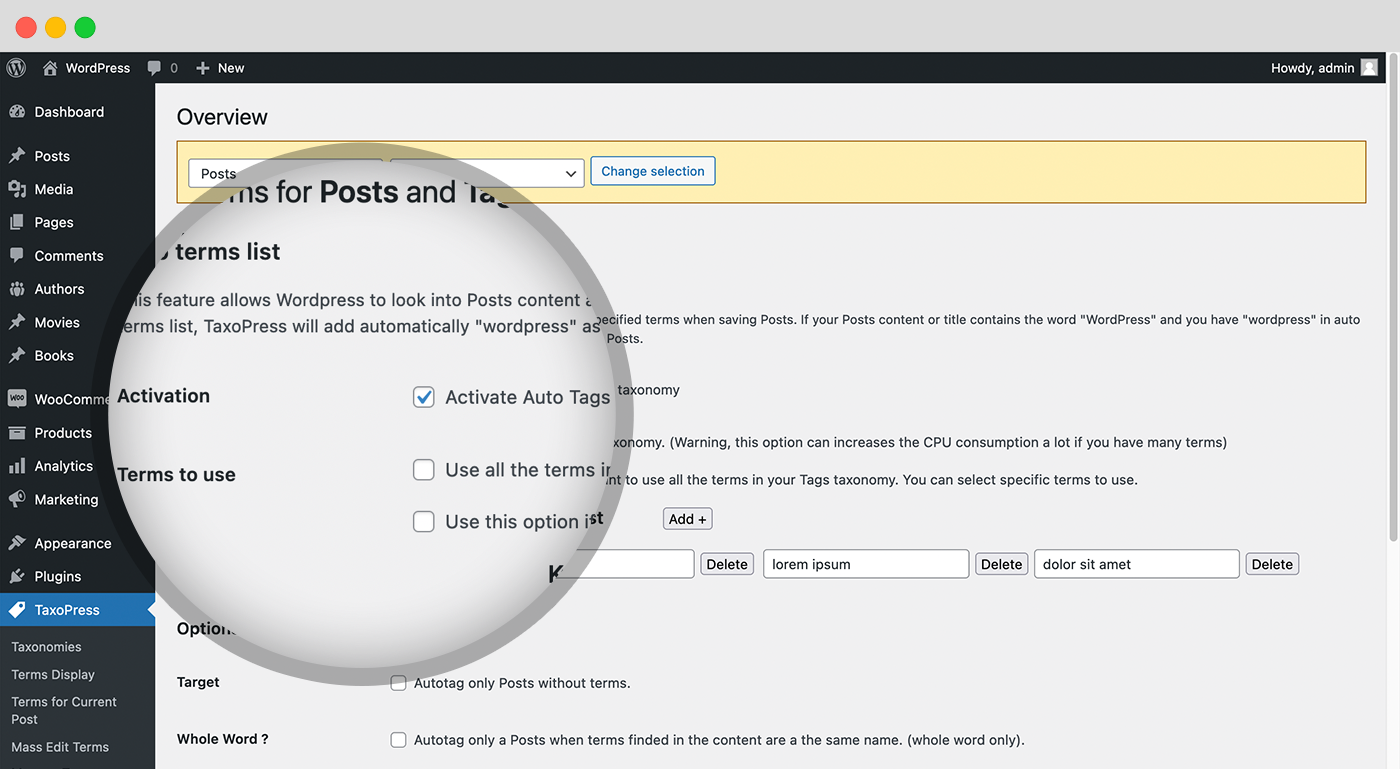
Esta función permite a WordPress examinar el contenido y el título de tu entrada en busca de términos específicos y añadidolos automáticamente como etiquetas. A continuación, se muestra un ejemplo de cómo funciona:
- You add “WordPress” to the keywords list in PublishPress Taxonomies.
- If your post content or title contains the word “WordPress”, then PublishPress Taxonomies will automatically add “WordPress” as a term for this post.
Click here to read about automatically adding terms.
Funcionalidad 7. Añadir términos con IA (versión Pro)
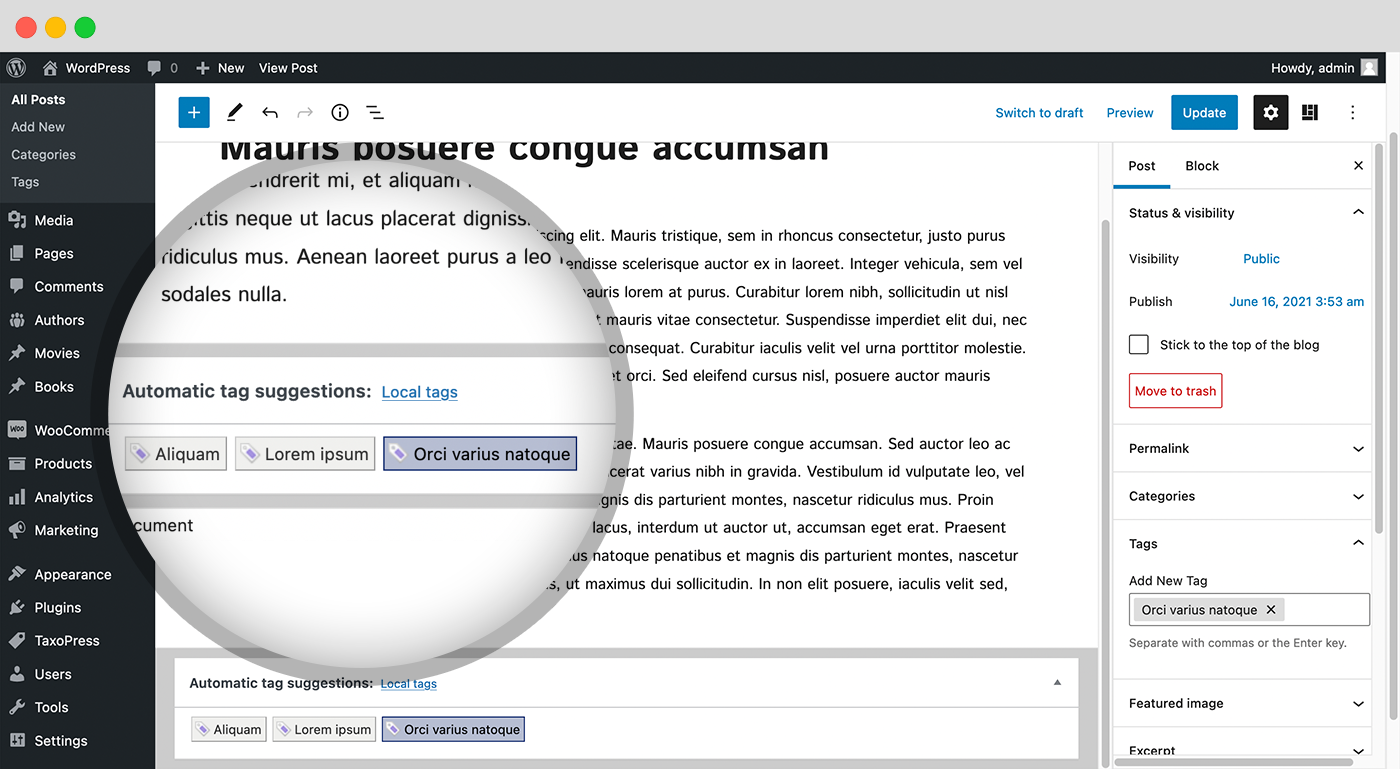
This feature makes it easier for you to find or create the best taxonomy terms for your content. PublishPress Taxonomies AI can show a metabox on your post editing screen with all these options:.
- Gestionar términos de entrada: esta característica te permite gestionar todos los términos que se adjuntan actualmente a una entrada.
- Suggest Existing Terms: This feature uses a tool in the PublishPress Taxonomies plugin that can scan your posts and suggest relevant terms that already exist on your site.
- Mostrar todos los términos existentes: esta característica te permite examinar todos los términos de una taxonomía.
- OpenAI: Estas integraciones permiten conectarse a servicios externos. Estos servicios analizan el contenido y sugieren términos relevantes. Pueden sugerir términos existentes y también nuevos.
Click here to read about PublishPress Taxonomies and AI.
Característica 8. Sinónimos de términos
Synonyms is a feature in PublishPress Taxonomies Pro that allows you to have multiple words associated with a single term. If PublishPress Taxonomies scans your content and finds a synonym, it will act as if it has found the main term.
Los sinónimos estarán disponibles en la pantalla de cada término. Por ejemplo, si tu término es «Manzana», puedes crear sinónimos como «Manzanas», « Deliciosa dorada», «Granny Smith», «Pink Lady», «Honeycrisp», «Deliciosa roja», «Braeburn» y «Gravenstein».
Click here to read about Term Synonyms.
Característica 9. Términos enlazados
Linked Terms is a feature in PublishPress Taxonomies Pro that allows you to connect terms. When the main term is added to a post, the linked terms will be added also.
For sites with a lot of terms, this feature makes it easier and quicker for your users to add the correct terms. For example, if you add the term “WordPress” to your posts, PublishPress Taxonomies can automatically add Linked Terms that include “CMS”, “website”, and “website design”.
Click here to read about Linked Terms.
Característica 10. Gestión de términos
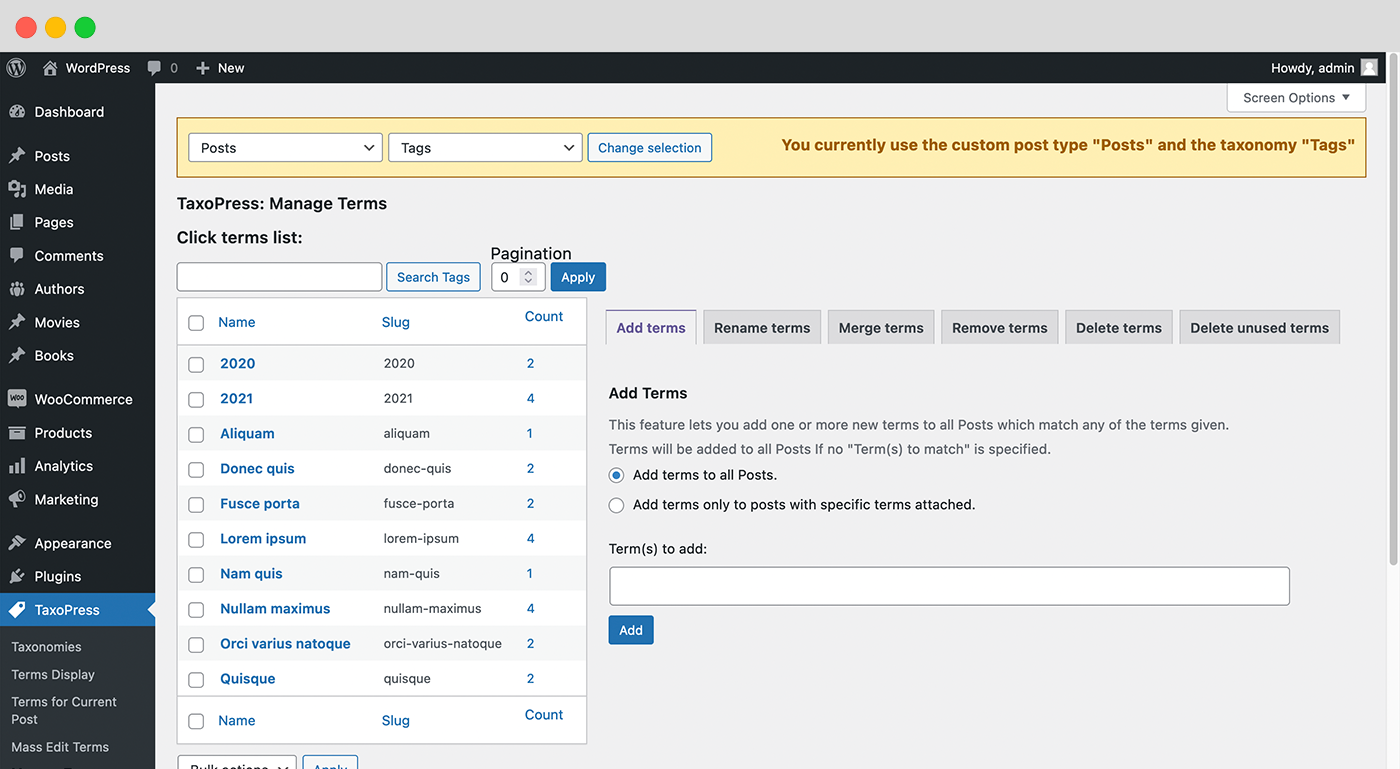
The Manage Terms screen in PublishPress Taxonomies provides you with several useful tools to manage the terms on your site. These tools can be used with any taxonomy. Here are some of the tools on the Manage Terms screen:
- Añadido términos: Añade rápidamente términos a tu contenido.
- Renombrar los términos: Cambia el nombre de tus términos en lotes.
- Fusionar términos: Combina los términos existentes. Esto es muy útil para corregido errores tipográficos en tus términos.
- Borrar términos no utilizados: Borra cualquier término que se usa con poca frecuencia.
Click here to read about managing terms.
PublishPress Taxonomies Pro
Upgrade to PublishPress Taxonomies Pro
This plugin is the free version of PublishPress Taxonomies. The Pro version of PublishPress Taxonomies has extra features and expert support. Get the PublishPress Taxonomies Pro plugin now!
The PublishPress Taxonomies and Tag Groups plugins
PublishPress Taxonomies is developed by the same team that support the popular Tag Groups plugin. Together PublishPress Tag Groups and PublishPress Taxonomies are an excellent solution for organizing and displaying your site’s content.
PublishPress Taxonomies Bug Reports
Bug reports for PublishPress Taxonomies are welcomed in our repository on GitHub. Please note that GitHub is not a support forum, but a place to report bugs in the plugin that can be replicated outside of a single site.
Follow the PublishPress Taxonomies team
Follow the PublishPress team and find product news on the PublishPress website.
Capturas
Bloques
Este plugin proporciona 3 bloques.
- Taxopress Related Posts
- Taxopress Tag Clouds
- Taxopress Post Tags
Instalación
Necesita PHP 5.6 o, idealmente, PHP 7.
PublishPress Taxonomies can be installed in 3 easy steps:
- Unzip the PublishPress Taxonomies archive and put all files into a folder like «/wp-content/plugins/simple-tags/»
- Activa el plugin a través del menú «Plugins» en WordPress
- Inside the WordPress admin, go to the ‘PublishPress Taxonomies’ mennu.
FAQ
-
Yes, you can. Both Categories and Tags are “taxonomies” and they can help you sort your content. However, on a normal WordPress site, both Categories and Tags are only available for Posts. This means that you do not have any options to organize your Pages … unless you use a plugin such as PublishPress Taxonomies. I’ll show you how to add Categories to your WordPress Pages.
- Install the PublishPress Taxonomies plugin.
- Go to “PublishPress Taxonomies” and then “Taxonomies” in your WordPress admin area.
- Haz clic en «Editar» en «Categorías».
- Haz clic en la pestaña «Tipos de contenido».
- Marca la casilla para «Páginas».
- También puedes querer marcar la casilla «Mostrar el contenido de todos los tipos de contenido en la página de archivo» para que tus entradas y páginas se agrupen en las páginas de categorías.
- Ahora verás que las «categorías» están disponibles en «páginas» en tu menú de administración de WordPress.
- Cuando editas una página, verás la casilla «categorías» en la barra lateral derecha.
- También podrás añadido y borrar categorías utilizando las características de «Edición rápida» y «Edición por lotes».
Click here to see how to Add Categories and Tags to WordPress Pages.
-
¿Cuántos niveles de subcategorías permite WordPress?
-
No hay límite técnico para la profundidad de las categorías anidadas. En una imagen que puedes ver haciendo clic en el enlace de abajo, he creado 10 niveles de categorías. Puedes seguir añadiendo niveles de subcategorías tan profundos como quieras.
La principal limitación a tener en cuenta será el área de administración de WordPress, que empezará a parecer sobrecargada. En otra que puedes ver al hacer clic, he añadido veinte niveles. Cuando voy a añadido el «nivel 21», el desplegable «categoría padre» parece estar roto. Esos niveles adicionales aparecen en la pantalla principal de «Categorías», pero cada uno de ellos solo se muestra después de una larga fila de guiones. Y cuando intentas añadido una categoría a una entrada, puedes encontrar que los niveles inferiores no son fácilmente visibles dentro de la caja meta. La razón por la que WordPress permite tener un número ilimitado de subcategorías es que estas son simples entradas de la base de datos. Las subcategorías son controladas por la columna padre en la tabla `wp_term_taxonomy`. Si añades más subcategorías no ralentizarás tu sitio en absoluto.
Finally, I’ll note that you can add multiple levels to any WordPress taxonomy. Go to the “Taxonomies” screen in PublishPress Taxonomies. When you click “Edit”, you’ll be able to change the settings for each taxonomy. You can control whether the taxonomy is organized in parent-child relationships.
-
¿Cómo puedo crear taxonomías en WordPress para uso interno?
-
We often have PublishPress Taxonomies users who want to organize their content privately. They want a taxonomy that is only used and seen in the WordPress admin area. With the PublishPress Taxonomies plugin, you can create taxonomies for internal use only. Your content will still be visible, but it can be organized with hidden taxonomies.
- Install the PublishPress Taxonomies plugin.
- Ve a «Taxonomías» en el área de administración de WordPress.
- Crear una nueva taxonomía.
That’s it! The easy approach is to use PublishPress Taxonomies to create a new taxonomy. If you never decide to actively display the taxonomy, it will never be shown anywhere. It will only be available in the WordPress admin area. You will be able to add terms to this taxonomy while adding content.
Dentro de la pantalla «Taxonomías», puedes hacer clic en la pestaña «Área de administración» y elegir dónde aparece tu taxonomía privada:
- Mostrar interfaz de usuario: ¿Debe ser la pantalla visible para gestionar estos términos?
- Mostrar en el menú de administración: ¿Debería haber un enlace a esta taxonomía en el menú de administración de WordPress?
- Mostrar en los menús de la portada: En caso de que esta taxonomía esté disponible para la pantalla de «Menús».
- Mostrar el menú de administración: ¿Debe aparecer esta taxonomía en pantallas como «Entradas» y «Páginas»?
- Mostrar en «Edición rápida» y «Edición por lotes»: ¿Debe estar disponible esta taxonomía en las herramientas de edición en pantallas como «Entradas» y «Páginas»?
-
¿Cómo puedo mostrar los términos de la taxonomía con un widget?
-
It is possible to use PublishPress Taxonomies to show terms in a WordPress widget. Go to Appearance > Widget and look for the “Term Display (Taxonomies Shortcode)” widget. This can be placed into any area that your theme has available.
-
¿Cómo puedo mostrar los términos de la taxonomía con un shortcode?
-
PublishPress Taxonomies allows you to show a cloud or list of the terms in a taxonomy. You can show your terms using the shortcode shown on the “Terms Display” screen. If you are using the block editor in WordPress, you can add shortcodes using the “Shortcode” block.
Click here to see more about showing terms with a shortcode.
-
If you have a busy WordPress site, it can be difficult to organize all your content. Fortunately, with PublishPress Taxonomies, there is a way to automatically add Tags to posts. You can create the Tags and then allow PublishPress Taxonomies to add them to relevant posts. The “Auto Terms” feature in PublishPress Taxonomies can scan your WordPress posts and automatically assign Tags. For example, imagine you have a term called “Apples”. Auto Terms can analyze your posts and when it finds the word “Apples”, it can add that Tag to your post.
- Go to PublishPress Taxonomies > Auto Terms in your WordPress admin menu.
- Elige la taxonomía que quieres utilizar con los términos automáticos. En este ejemplo, elige «Etiquetas».
- Elige los tipos de contenido que quieres utilizar con esta característica. En este ejemplo, elige «Entradas».
- El otro ajuste necesario se encuentra en «Términos a utilizar». Tienes que elegir si quieres utilizar todos los términos de tu taxonomía «Etiquetas» o solo un grupo selecto. Si eliges utilizar todos los términos, haz una prueba con cuidado, ya que este proceso puede ralentizar tu sitio si tienes 10.000 términos, o si tienes un servidor lento.
- Haz clic en «Guardar términos automáticos».
- You are now ready to automatically add terms! One approach is to use the “Existing content” option to retroactively add Tags to your content. For new content, PublishPress Taxonomies can automatically scanned the post text and added the correct Tags.
Click here to see more about automatically adding WordPress Tags.
-
If you have a busy WooCommerce site, it can be difficult to organize all your products. Fortunately, with PublishPress Taxonomies, there is a way to automatically add Product Tags and Categories. The “Auto Terms” feature in PublishPress Taxonomies can scan your WooCommerce products and automatically assign WooCommerce Tags and WooCommerce Category. For example, imagine you have a term called “WordPress”. Auto Terms can analyze your WooCommerce products and when it finds the word “WordPress”, it can add that term to your post.
- Go to PublishPress Taxonomies > Auto Terms in your WordPress admin menu.
- Elige la taxonomía que quieres utilizar con los términos automáticos. En este ejemplo, elige «Etiquetas de producto».
- Elige los tipos de contenido que quieres utilizar con esta característica. En este ejemplo, elige «Productos».
- El otro ajuste necesario se encuentra en «Términos a utilizar». Tienes que elegir si quieres utilizar todos los términos de tu taxonomía «Etiquetas de producto» o solo un grupo selecto. Si eliges utilizar todos los términos, haz una prueba con cuidado, ya que este proceso puede ralentizar tu sitio si tienes 10.000 términos, o si tienes un servidor lento.
- You are now ready to automatically add terms! One approach is to use the “Existing content” option to retroactively add Product Tags to your WooCommerce products. For new content, PublishPress Taxonomies can automatically scanned the product text and added the correct WooCommerce Tag or WooCommerce Category.
Click here to see more about automatically adding WooCoomerce Product Tags.
-
The main difference between Categories and Tags is the ability to create levels of Categories. Categories are hierarchical, which means terms can be organized into a parent-child relationship. For example, you could have a Category called “Fruit”, and under this Category you could have categories called “Apples”, “Bananas”, “Grapes”, and “Peaches”. Tags are not hierarchical, which means there’s no relationship between them. You can still add the same words as Tags, but by default they can not have relationships. You can modify this using the Taxonomies screen in PublishPress Taxonomies.
Click here to see the difference between Tags and Categories
-
Can I Build WordPress Tag Generator With PublishPress Taxonomies?
-
Yes, this is possible with the PublishPress Taxonomies plugin. PublishPress Taxonomies has a feature that can analyze your content and automatically add new terms. This tag generator will be very useful for anyone who creates a lot of content. This feature is called “Auto Terms” and it works by integrating with the OpenAI, IBM Watson, Dandelion or LSEF systems to scan content and create terms.
-
How Do I Integrate OpenAI with PublishPress Taxonomies?
-
OpenAI / OpenAI / ChatGPT is the most popular AI tool available today. The PublishPress Taxonomies AI feature has an integration with the OpenAI service. This OpenAI guide will help you register for an account at OpenAI and get an API Key to use with PublishPress Taxonomies.
-
How Do I Integrate IBW Watson with PublishPress Taxonomies?
-
IBW Watson is one of the most powerful AI tools available today. The PublishPress Taxonomies AI feature has an integration with the Natural Language Understanding service from IBM. This IBM Watson guide will help you register for an account at IBM Cloud and get an API Key and URL to use with PublishPress Taxonomies.
Reseñas


Colaboradores y desarrolladores
«PublishPress Taxonomies – Tag, Category, and Taxonomy Manager – Autotagger Automatically Add Terms» es un software de código abierto. Las siguientes personas han colaborado con este plugin.
Colaboradores


«PublishPress Taxonomies – Tag, Category, and Taxonomy Manager – Autotagger Automatically Add Terms» está traducido en 7 idiomas. Gracias a los traductores por sus contribuciones.
¿Interesado en el desarrollo?
Revisa el código , echa un vistazo al repositorio SVN o suscríbete al registro de desarrollo por RSS.
Registro de cambios
= [4.0.0] – 28 September, 2026
* Rebrand: Move TaxoPress to PublishPress
[3.54.0] – 22 September, 2026
- Security: Prevent reflected XSS in Terms row-action URLs
- Fixed: Prevent creation of a destination term when merging terms and no source terms exist
- Fixed: Preserve the destination term when it is included among the terms being merged
- Fixed: Fix Auto Links excluded-term matching
- Update: Add per-post Auto Terms status controls
- Update: Add per-post Auto Links status controls and enable overrides
[3.53.0] – 01 September, 2026
- Fixed: Mass Edit pagination is broken, #3014
- Update: Enforce native taxonomy capabilities for term actions, #3013
- Update: Bound Auto Terms existing-content processing, #3012
- Update: Restrict administrative taxonomy term lookups, #3011
- Update: Harden AI integrations and metabox mutations, #3010
- Add a loco.xml file, #3009
[3.52.0] – 19 August, 2026
- Update: Normalize Auto Terms specific-term values, #3001
- Update: Add permission checks to Pro configuration copy actions, #3000
- Update: Restrict synonym validation to TaxoPress managers, #2999
- Add permission checks to term copy actions, #2998
- Harden Linked Terms list and bulk actions, #2997
- Strengthen Manage Terms request validation, #2995
- Tighten access checks for term suggestion lookups, #2993
- Add request validation to legacy tag creation, #2991
- Harden TaxoPress AI term result rendering, #2989
[3.51.0] – 22 de julio de 2026
- Fixed: Fatal memory exhaustion on Terms screen (st_terms) with hierarchical taxonomy — not related to term count, #2967
- Fixed: Related Posts thumbnail image resolution setting is ignored, #2964
- Fixed: Terms screen causes memory exhaustion on large sites, #2962
- Fixed: Improve AI preview post validation, #2968. Thanks to Duy for the report
- Fixed: Terms screen can run out of memory on large sites, #2961
- Update: Remove the lock icon in the Pro version, #2963
- Update: Include changelog in readme.txt for plugin update dialog box, #2959
The full changelog can be found on GitHub.